The Interview · Great American Music Hall
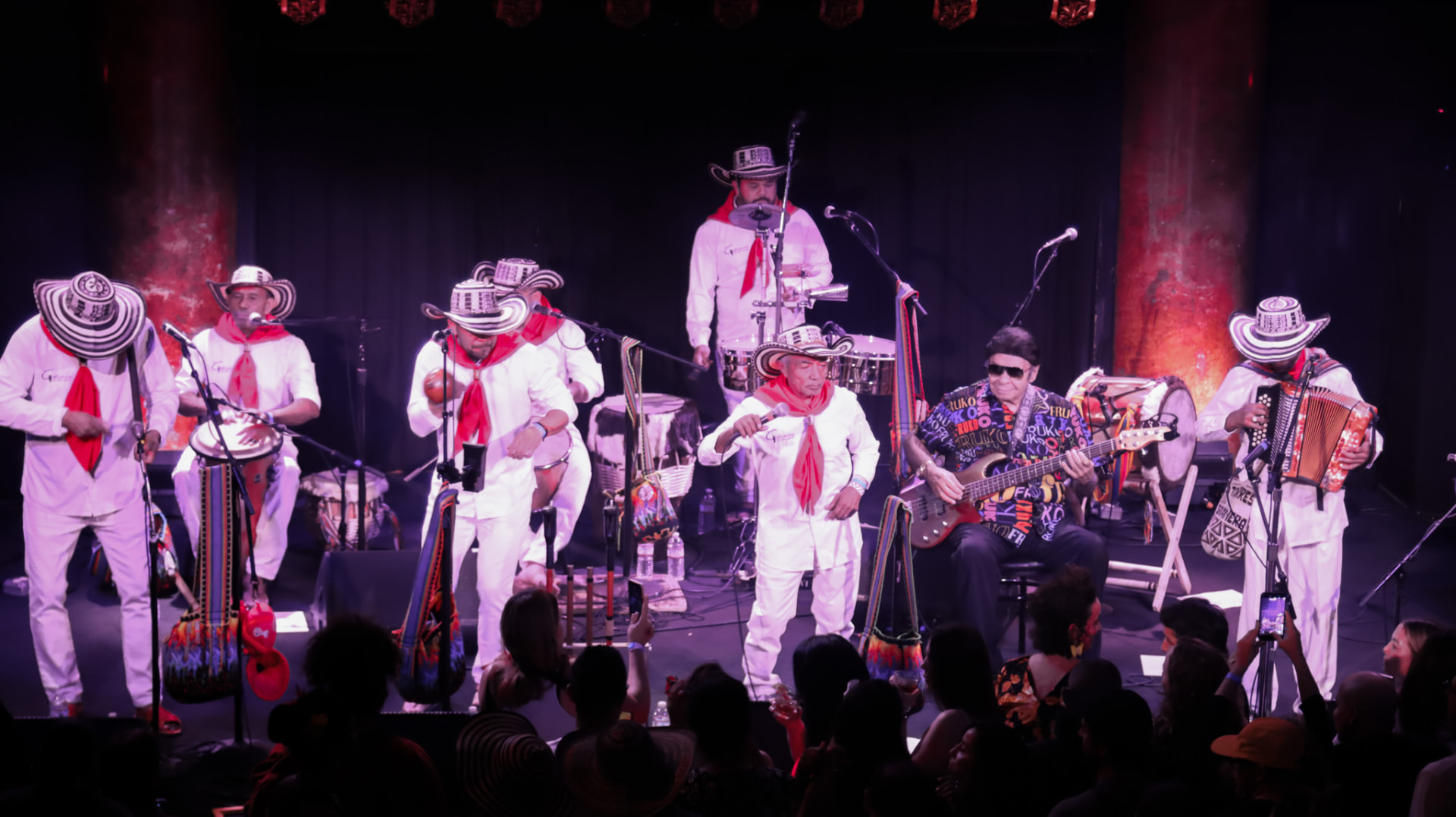
In conversation with
La cumbia no se aprende.Se hereda.
Cumbia isn't learned. It's inherited.
Three living legends of Colombian cumbia, one record, and one conversation about carrying a tradition forward.
Behind La Escena | The Gathering
Three chapters, one room
Some records document a genre. Madre Cumbia lets you hear its whole life. The gaitas and drums of San Jacinto. The sabanero accordion of the Caribbean plains. The electric bass that carried cumbia into dance halls across the world. Three chapters of one story, finally in the same room.
I never imagined I'd see the three of them on one stage.
Then I got to sit beside them.
The Roots
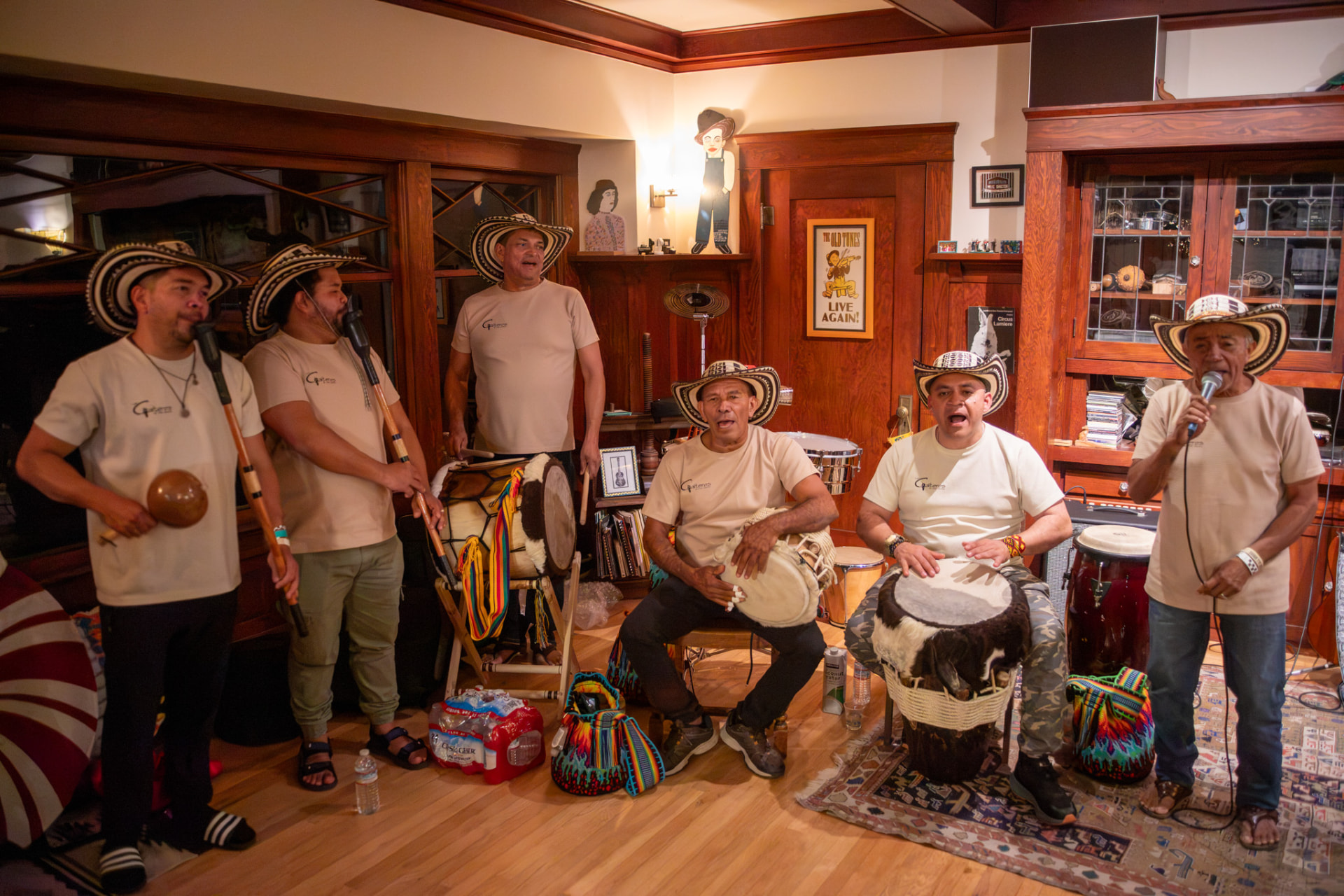
Los Gaiteros de San Jacinto
Los Gaiteros de San Jacinto come from San Jacinto, in the Montes de María of Bolívar, Colombia. For generations they have kept alive the conversation between gaitas, drums and voice, an Afro-Indigenous tradition older than the recording industry and the root that cumbia grows from. In 2007 they won the Latin Grammy for Best Folk Album with Un Fuego de Sangre Pura. Listen to them and you're hearing where it all began.
“La cumbia es la reina de este folclore tan hermoso.
Nosotros la sentimos así en el corazón, en el alma.”Cumbia is the queen of this beautiful folklore.
That's how we feel it, in the heart and in the soul.
The Architect
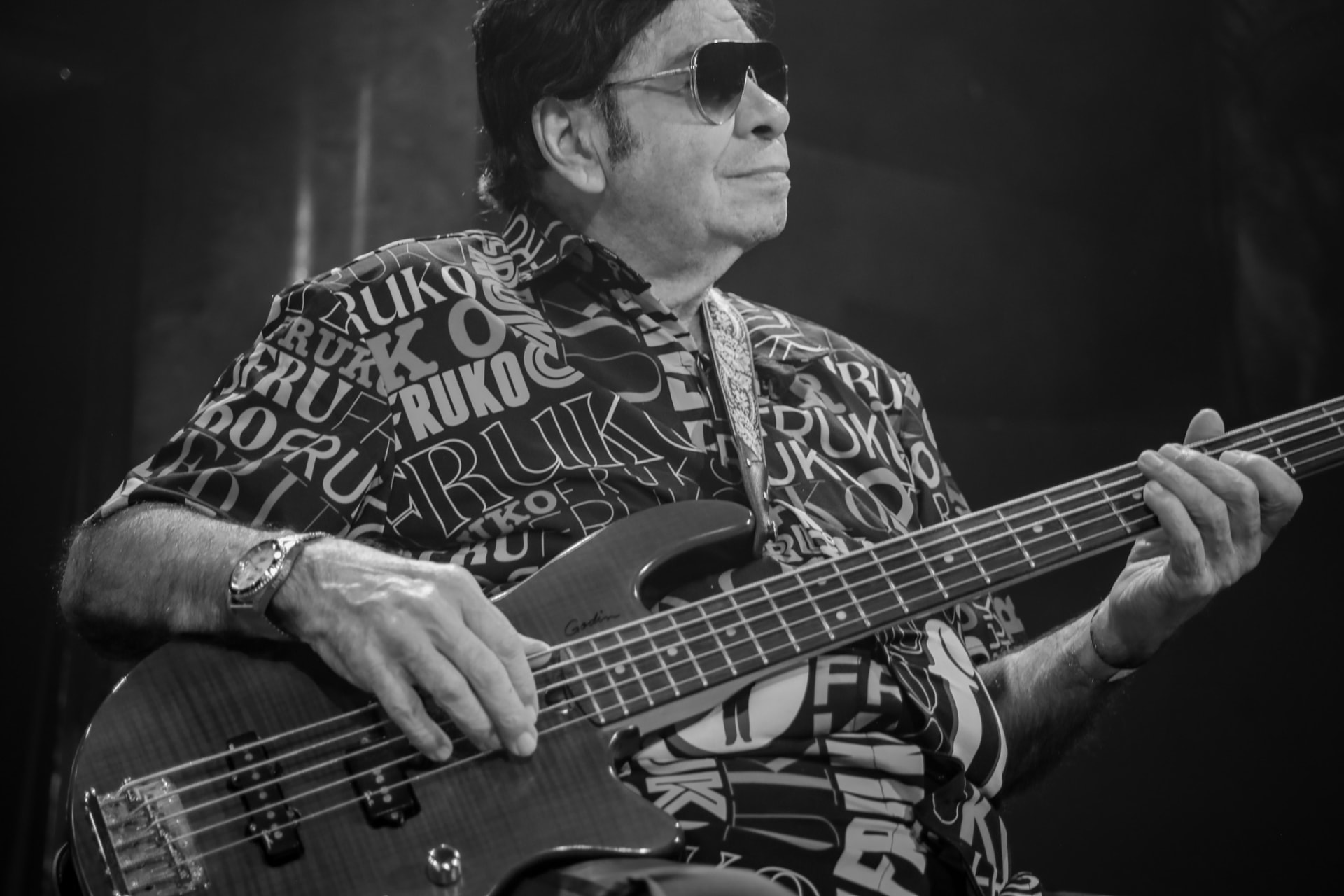
Fruko
Fruko is the bass, the producer and the bandleader behind Fruko y Sus Tesos. During the golden era of Discos Fuentes, he helped build the sound of modern tropical music, working on records with La Sonora Dinamita, Joe Arroyo and so many more. He is the bridge that carried cumbia from the countryside onto dance floors around the world.
“Siempre he sido respetuoso del folclor.”
I have always respected the folklore.

“Es una tradición que está en el
ADN de las personas.”It's a tradition that lives in people's DNA.
The Accordion
Carmelo Torres
Carmelo Torres plays the accordion the old way. He learned cumbia sabanera from Andrés Landero himself, and he's considered one of the last great acordeoneros gruesos, a powerful, deeply rhythmic style born in the same communities where cumbia first flourished. You may have seen him as Francisco el Hombre in Netflix's One Hundred Years of Solitude. He is also a teacher, and he asks his students for one thing: that whatever they do with cumbia, they never forget its essence.
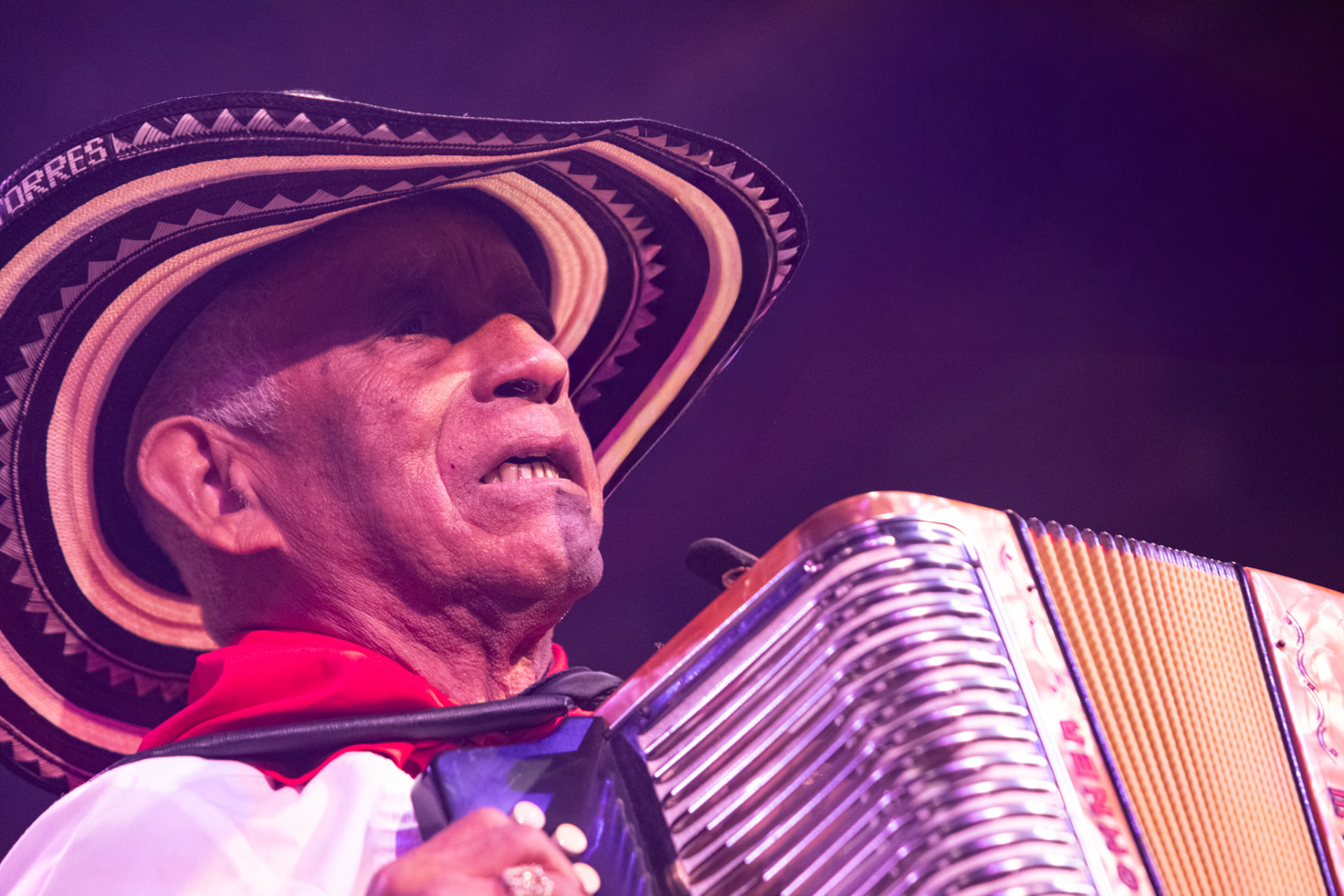
“No importa que la vistan, pero por dentro
vaya esa campesina siempre.”Dress her up however you like. Inside, she is always that country girl.
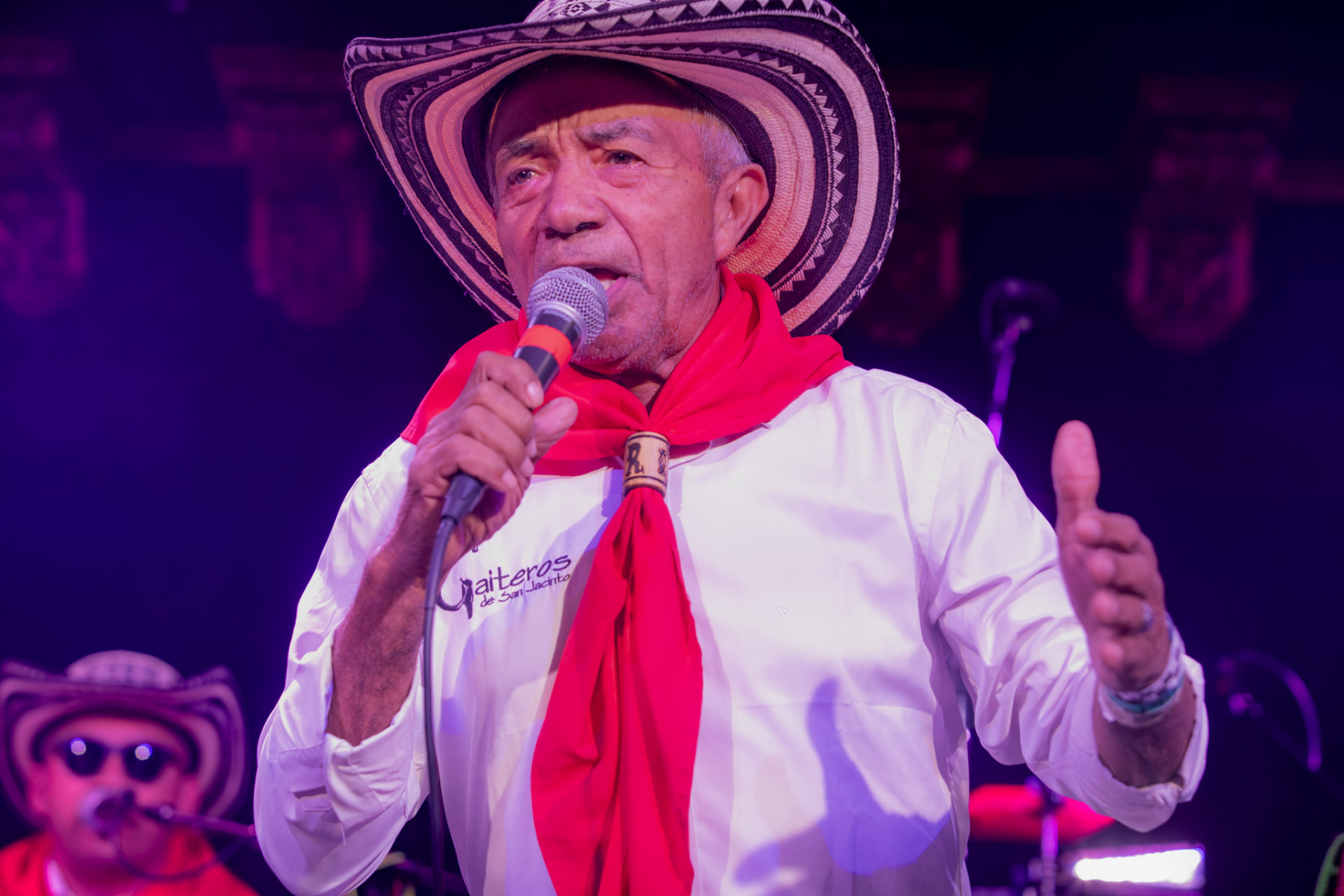
“Para nosotros esta unión ha sido como un sueño
que se ha convertido en realidad.”For us, this union has been like a dream that became reality.
The Album
Madre Cumbia
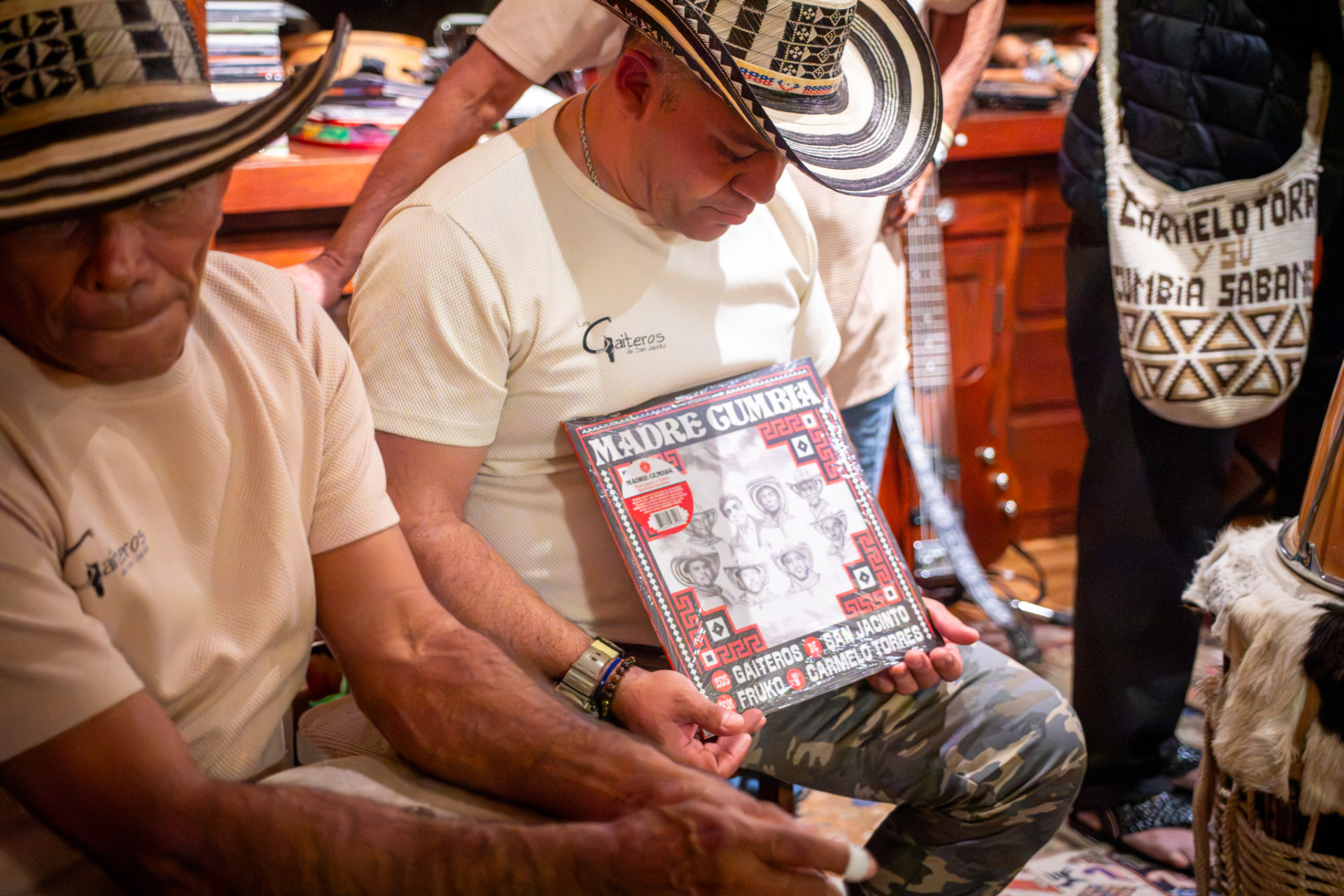
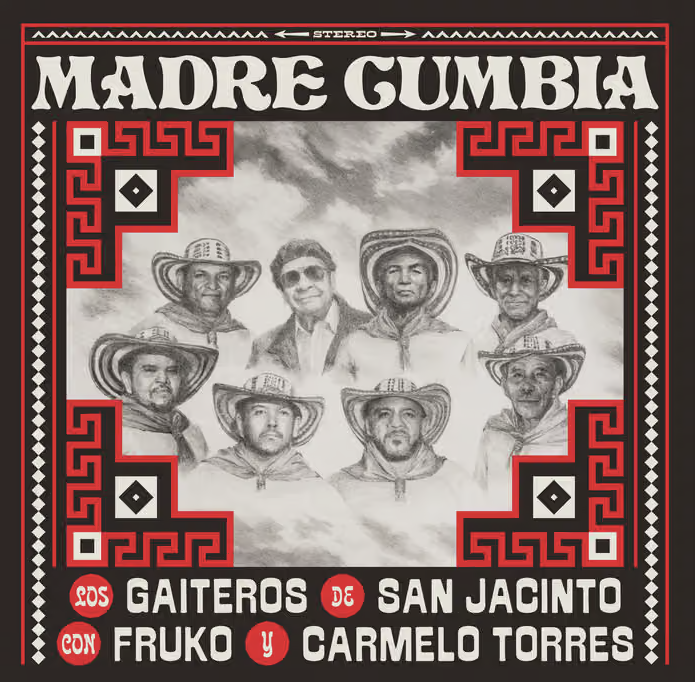
Madre Cumbia traces cumbia's full arc in one record: ancestral gaitas and drums, the sabanero accordion, and the electric bass that redefined tropical music. The first single, Magdalena Ruiz, was written by San Jacinto's own Adolfo Pacheco, one of Colombia's great songwriters. It takes you inside the rueda de cumbia, the circle where music becomes ritual and the dancer turns sound into celebration. Listen for the moment all three generations lock into the same groove.
“La cumbia es sello de calidad y es un tesoro mundial
en la cultura de la música.”Cumbia is a seal of quality,
a world treasure in the culture of music.
Why It Matters · The Future Is Dancing
A sound that keeps finding new hearts
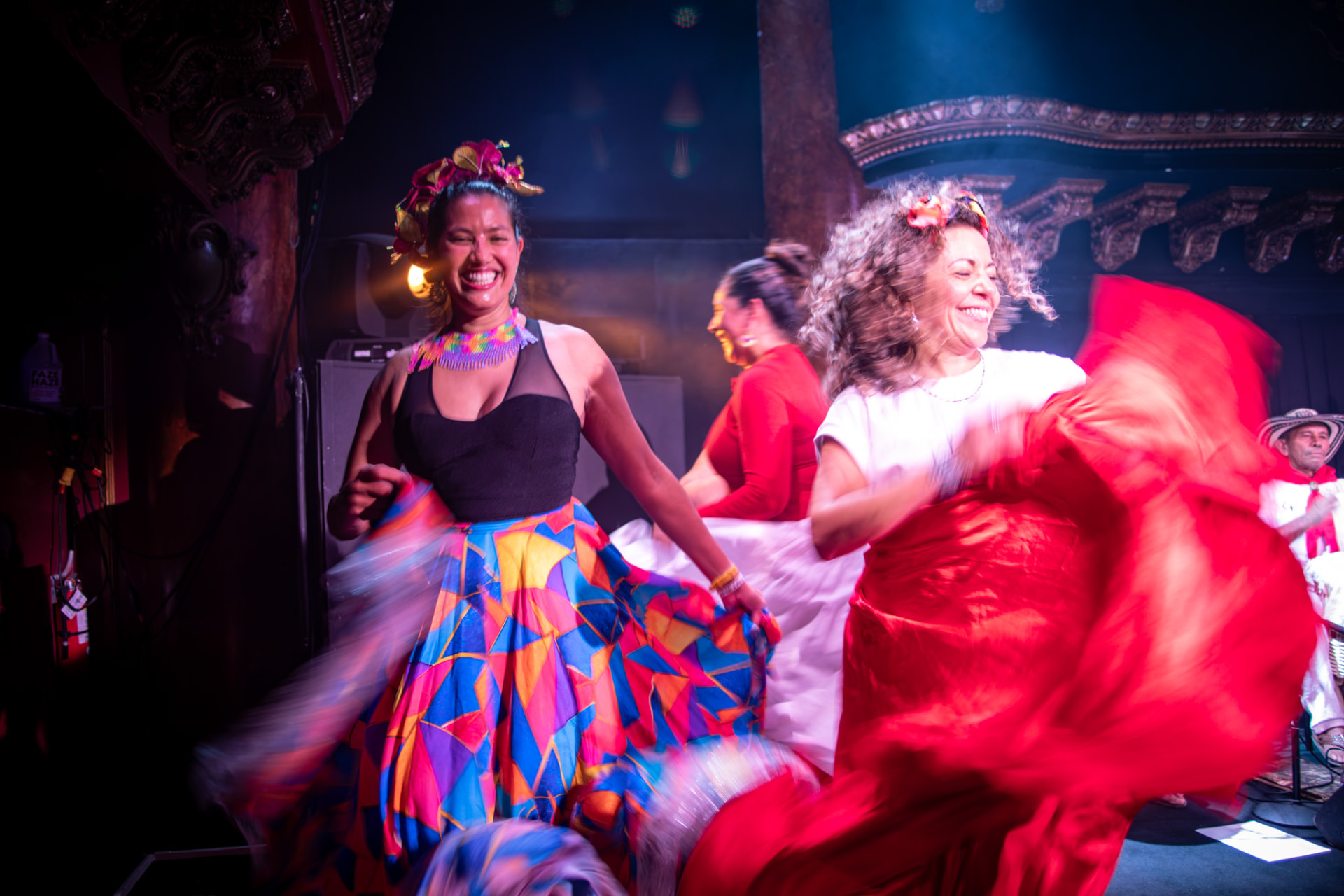
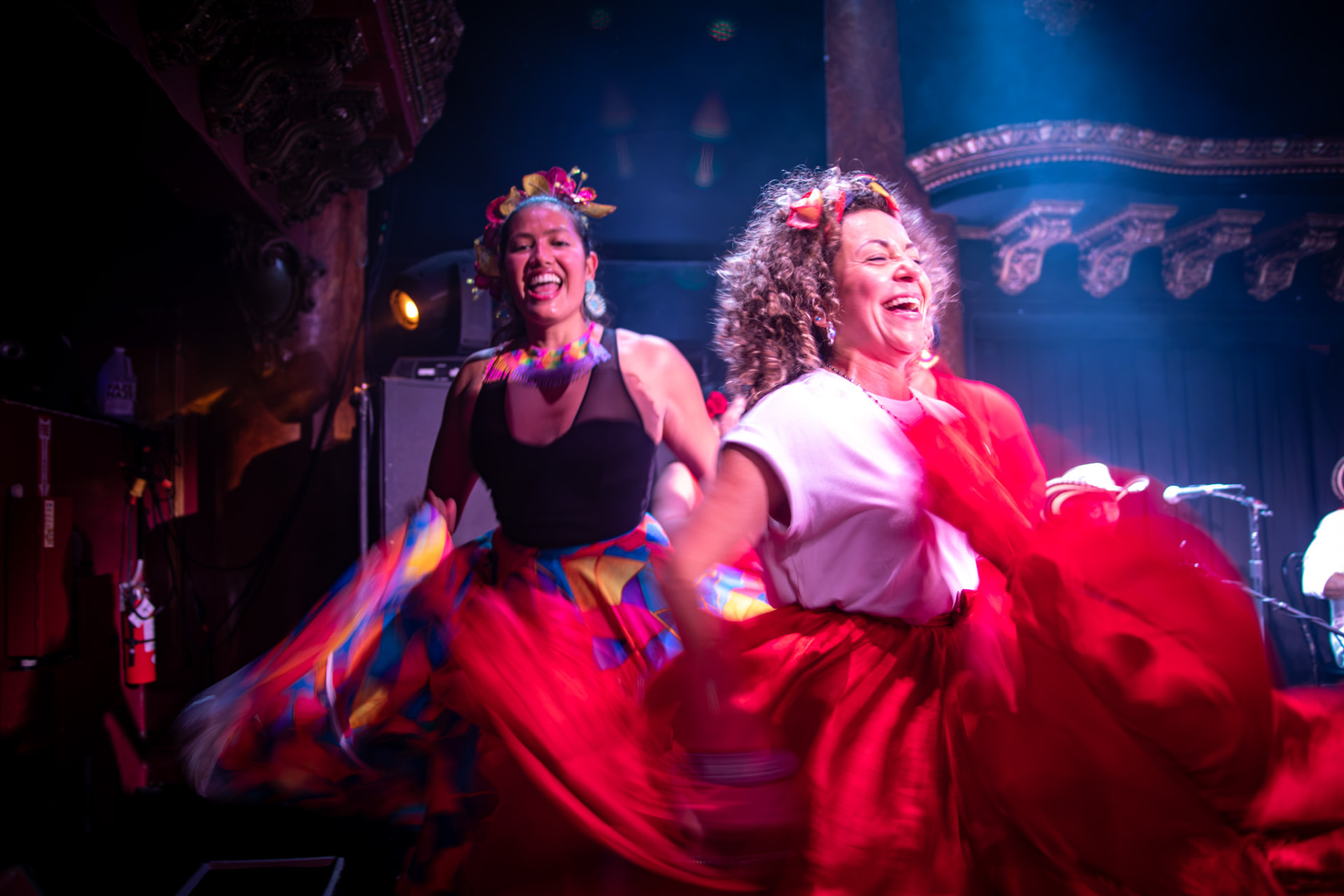
Traditions don't survive on nostalgia. They survive when someone new picks them up. In Los Angeles, a school of three- and four-year-olds danced for these maestros. No one had taught those kids to love cumbia. They found it on their own, then crowded around the instruments, watching and asking. That's what this record protects: a sound that keeps finding new hearts.
“Ese es el futuro de esta música.”
That is the future of this music.

Keep It Alive · Support the Music
Technology changed how we live with music. A whole catalog fits in your pocket, and a song can cross the world in seconds. It also changed how musicians get paid. A stream pays an artist very little, and for elders who have spent a lifetime keeping a tradition alive, that math doesn't hold. So artists are coming back to the physical: records you can hold, shows you can feel, merch you can wear. Madre Cumbia arrived on vinyl first. When you buy the record, buy the ticket and buy the shirt, more of your money reaches the people who made the music.
Closing
So It Never Dies
“Que aprendan a tocar una cumbia y la interpreten tradicionalmente,
para que este ritmo hermoso no muera jamás.”Learn to play a cumbia, and play it the traditional way,
so this beautiful rhythm never dies.
Listen to Madre Cumbia, out now on vinyl. Buy it, support it, and catch them live. ¡Que viva la cumbia colombiana!
Interview by Behind La Escena
Preservamos historias. Conectamos culturas.
Photography by: Jazmin Morelos · Produced by Jazmin Morelos
@btebehindtheescena